


Creatives: Stop Niching Down, 2026 Will Begin the Era of the Generalist

For the last decade, creative careers have been shaped by specialization.
UX designers. Brand designers. Social strategists. Motion designers. Recently “Prompt engineers” have become a thing. Each role optimized for a narrow slice of the pipeline. That made sense in a growth economy, when companies could afford large teams and deep benches.
That era is ending.
In 2026, the most valuable creative professionals won’t be specialists. This is the era of the generalist.
Why Specialization Is Losing Its Edge
Specialists are incredible at execution. But they depend on stable environments: clear briefs, fixed budgets, predictable timelines, and well-defined problems.
The next few years, especially with AI integration, won’t offer much of that
.
Companies are flatter. Teams are smaller. Budgets are tighter. The problems are messier, and often span across multiple departments.
In those environments, a specialist needs direction, while a generalist rolls up their sleeves and “stops the leaks.”
Generalists Don’t Replace Specialists, they Orchestrate Them
The best generalists aren’t “jacks of all trades.” They’re orchestra conductors.
They understand enough design to shape a product narrative. Enough marketing to frame a launch. Enough business to know what actually moves the needle. Enough technology to ask the right questions, not write the code.
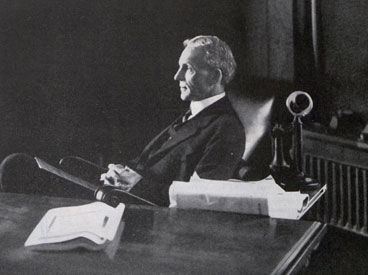
Im often reminded of the story of Henry Ford, when a lawyer was trying to make him look ignorant in certain processes of his business stating “I have a row of electric push-buttons on my desk, and by pushing the right button, I can summon to my aid people who can answer any question I desire to ask concerning the business to which I am devoting most of my efforts.”
Henry Ford knew enough about everything to effectively know what he needed. This is the generalist. Ford may not have known how to rewire a spark plug configuration but he knew enough about it to know exactly WHAT he needed and WHEN. In many ways, Henry Ford was the greatest industrial generalist of the 20th Century.
His value wasn’t mastery of one craft. It’s pattern recognition across many.
And that’s exactly what modern companies are starving for.
The Creative Areas That Will Matter Most in 2026
The creative roles in demand won’t be job titles — they’ll be capabilities:
Narrative Strategy aka Storytelling
Translating complexity into clarity. Making products and companies make sense to humans.
Brand + Product Thinking
Understanding that what you sell and how you talk about it are inseparable.
Repositioning & Reframing
Taking existing assets and making them relevant to new realities.
Creative Direction Across Systems
Not just campaigns, but ecosystems: content, UX, packaging, partnerships.
Taste + Judgment
In an AI-saturated world, knowing what not to make is the differentiator.
These aren’t specialist lanes. They’re generalist strengths.
AI is Accelerating This Shift
AI doesn’t eliminate creativity, but it certainly compresses execution.
When production gets cheaper and faster, the bottleneck becomes decision-making. What story do we tell? Which idea deserves oxygen? Where should we burn calories?
Those decisions don’t belong to specialists.They belong to people who understand the whole picture.
AI rewards creative leaders who can think broadly, not narrowly.
Why This Is Good News
For creatives who’ve felt pressure to niche down endlessly, this shift is liberating.
The future doesn’t belong to people who know one tool perfectly. It belongs to people who can adapt, connect, and translate, especially when circumstances (often quickly) change.
In uncertain markets, companies don’t need more output. They need better judgment.
And by 2026, that judgment will be the most valuable creative skill of all.


Comments